
DOP: Draw One Part
SayGames LtdPuzzle
4.43.87K Reviews
- Version
- 1.2.63
- Installs
- 100.00M
- Age Rating
- Everyone
Screenshots
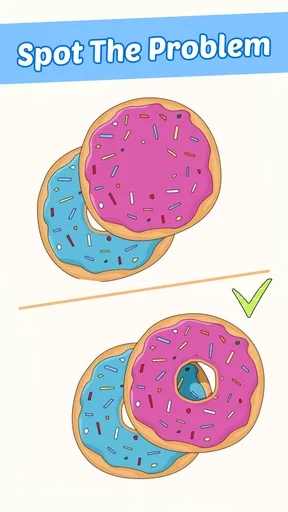
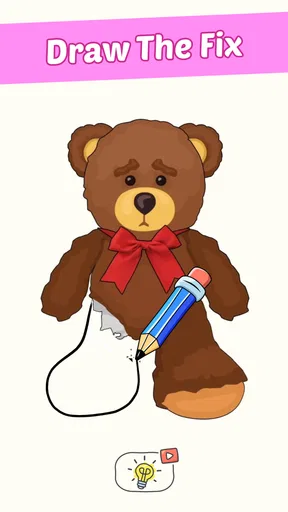
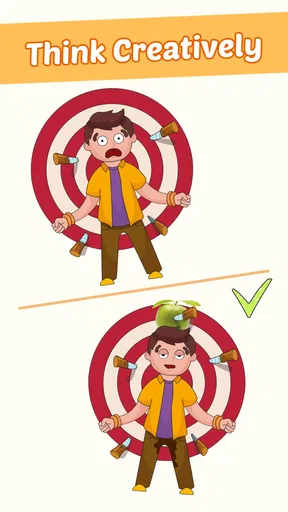
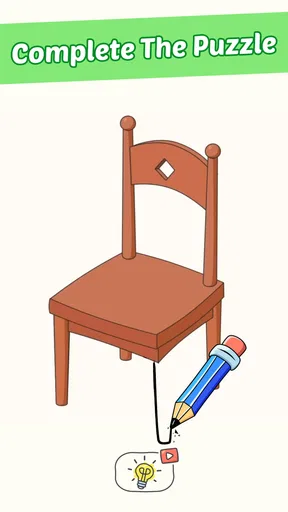
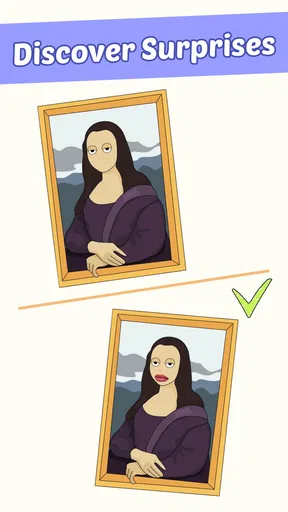
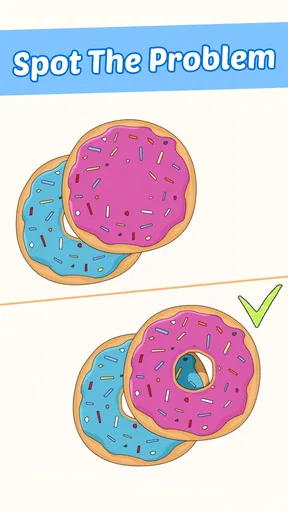
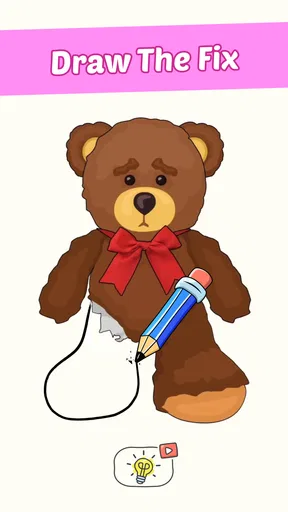
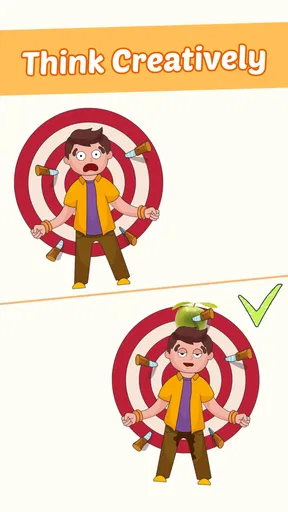
Our Review of DOP: Draw One Part
 Analysis by Appyee
When I choose a quick puzzle game, I want to know more than whether its central idea sounds clever. I want to know if I can understand it without a tutorial, whether the puzzles reward attention rather than drawing skill, and what kind of mood it suits. DOP: Draw One Part is built around a simple task: look at an incomplete picture and draw the missing piece. That makes it easy to try in a spare moment, though the appeal depends on enjoying visual riddles and being willing to rethink what a picture is suggesting.
What to expect from a drawing puzzle
This is a puzzle game from SayGames Ltd, and its main challenge is interpretation. You are not being asked to make a polished illustration. You are trying to identify what the scene lacks, then sketch a clue that completes the idea. That distinction matters: people who feel awkward drawing can still enjoy it, while confident artists may find that artistic technique is not the point.
I would approach each picture by first naming the objects and relationships I can see, then asking what would make the scene make sense. If the obvious answer does not work, I try a simpler shape or reconsider whether I have misunderstood the picture. That small pause is often more useful than repeatedly tracing a detailed drawing. It also makes the game a better fit for someone who likes lateral-thinking puzzles than for someone seeking a serious drawing tool.
The game is free to download, is rated for Everyone, and includes in-app purchases listed at $1.99 per item. Its average rating is 4.4 from around 355,000 ratings, and it has passed 100 million installs. Those figures suggest broad appeal, but they do not tell you whether its particular style of visual humor will land for you. I would treat the popularity as a reason to consider it, not as a guarantee that every puzzle will match your taste.
Where it fits into an ordinary day
A realistic use for this kind of game is a short wait: I might open it while waiting for a takeaway, sitting through a quiet part of a commute, or taking a brief screen break between tasks. The one-picture-at-a-time premise is easy to grasp, so I can start without setting aside time to learn a complicated control scheme. If I get stuck, I can put the phone down and return with fresh eyes rather than needing to remember a long chain of moves.
That convenience is also a limitation. The puzzles ask for a little attention, so this is not my first choice when I need to keep my eyes on something else or when I want a game that plays itself in the background. I also would not rely on it as a structured daily brain-training plan. It is better understood as a light, self-contained diversion: a few moments of observation and a satisfying “oh, that’s what was missing” when an answer clicks.
Getting Started with DOP: Draw One Part
Jumping into DOP: Draw One Part is as easy as pie. The app is available for both Android and iOS, and it doesn’t weigh down your phone with heavy downloads. Once you’ve got it installed, you’re greeted with a simple interface that’s as intuitive as it is inviting. The whole vibe is playful, with bright colors and a design that whispers, “Come on, give it a try!”
The premise is pretty straightforward: you’re given a partial drawing, and it’s your job to complete it. Sounds easy, right? But here’s where the fun begins. The game challenges your creativity and problem-solving skills by requiring you to think outside the box. You’ll often find yourself scratching your head, wondering, “What am I missing here?”
As you work through a scene, I find it useful to separate observation from action. First, decide what part of the image seems incomplete; then make one clear attempt rather than adding extra decoration. This is a practical habit for any draw-the-missing-part puzzle: a concise mark makes it easier to tell whether your interpretation was right. It also prevents a vague sketch from turning into a guessing game between you and the screen.
Gameplay and Mechanics
The mechanics are simple, which is a huge plus in my book. You don’t need to be a professional artist to excel, but a little creativity goes a long way. You use your finger as a pencil to draw the missing part of the picture. The app’s smart enough to know what you’re trying to do, thanks to its intuitive recognition system.
What I absolutely love about this game is how it encourages you to think differently. Sometimes the solution is right in front of you, but it takes a bit of lateral thinking to see it. You might find yourself chuckling at the cleverness of some solutions, or even kicking yourself for not seeing something so obvious.
The key trade-off in this control style is that recognition has to interpret a quick finger sketch rather than a carefully measured line. I would keep strokes simple and avoid trying to make the picture beautiful; clarity of the idea matters more than neatness. If a reasonable attempt does not solve a puzzle, I would change the interpretation before assuming the drawing needs more detail. That approach saves frustration and keeps the game focused on its actual strength: spotting the missing idea.
Visuals and Sound
The visual style of DOP: Draw One Part is charmingly simplistic. The bright, cartoonish graphics are easy on the eyes and add to the game’s overall appeal. Each level is well-crafted, with enough variety to keep things interesting as you progress. It’s a feast for the eyes without overwhelming you with too much detail.
Soundwise, the app keeps things light and fun. The background music is catchy yet unobtrusive, and the sound effects add a nice touch to the drawing experience. It’s one of those games where you might find yourself humming along without even realizing it.
The uncluttered pictures help the puzzles stay readable on a phone, but the same simplicity may not satisfy players who want layered artwork or a strong visual world to explore. I see the presentation as serving the puzzle rather than competing with it. If I am playing somewhere I would rather keep a game quiet, I can make that choice using my device’s normal sound controls; the important part of each level is still the image and the missing element.
Levels and Challenges
The game offers a ton of levels, and they progressively get more challenging, keeping you engaged and entertained. Each level feels fresh and unique, which is a testament to the developers’ creativity. As you advance, you’ll encounter trickier puzzles that require a bit more thought, but they’re always solvable with a bit of patience and creativity.
What keeps you coming back is the mix of satisfaction and surprise. Completing a particularly tricky level is incredibly rewarding, and there’s always the curiosity of wondering what comes next.
For me, the best way to enjoy that progression is not to rush through every screen as quickly as possible. When an answer is unclear, I look at the picture from a different angle: what does the character need, what would make the object usable, or what visual detail would complete the joke? Those questions turn a stuck moment into part of the puzzle rather than a reason to tap randomly. They are also a good test of whether you enjoy this game’s style: the pleasure comes from interpreting the prompt, not from mastering a complicated set of controls.
How it compares with other puzzle choices
Compared with word puzzles, this game asks less of your vocabulary and more of your ability to read a small visual scene. Compared with number or logic-grid games, it is looser: there may be a playful leap in what the image means rather than a sequence of deductions that can be written out. That makes it approachable when I want a light change of pace, but it may feel less satisfying if I want rigorous logic, a long-form challenge, or a clear sense of strategy.
It also occupies a different lane from open-ended drawing apps. Those are better when the goal is to create your own picture; here, the drawing is a response to a specific puzzle. If I wanted to practise sketching or make something original, I would choose a drawing-focused option instead. If I wanted a harder, more methodical puzzle session, I would pick a logic or word game. This one is strongest when I want the middle ground: a visual prompt, a quick attempt, and a small moment of discovery.
One useful decision point is how you feel about ambiguity. A player who enjoys trying an unexpected interpretation may find the loose, visual format refreshing. Someone who wants every puzzle to have a formal clue and a single deduction path may be irritated when the intended answer is not immediately apparent. I would not treat that friction as a failure of drawing ability; the more important question is whether you enjoy working out what the picture is asking.
Practical expectations before you install
The game is free to start, while optional in-app purchases are priced at $1.99 per item. I would go in expecting a free puzzle experience with optional spending rather than assuming every possible convenience is included. If you prefer to avoid purchases altogether, it is sensible to check the in-app purchase controls on your device before handing the phone to a child. The Everyone age rating makes the game broadly suitable, but household purchase settings are still a useful safeguard for any app with optional items.
For compatibility, the current version is 1.2.63 and the minimum operating system is 8.0. If you are choosing it for an older device, checking that requirement before installation can save time. It is also available on Android and iOS, so the basic decision is less about platform exclusivity and more about whether this particular draw-to-complete format suits the person who will play it.
It has been available since April 25, 2020, and its large player base is reflected in more than 3.9 thousand reviews alongside its ratings. I would still judge it by a short trial rather than by its reach alone. A few puzzles are enough to tell whether you enjoy the visual jokes, the touch-drawing interaction, and the occasional need to reconsider an obvious-looking answer.
Final Thoughts
All in all, DOP: Draw One Part is a delightful escape from the everyday grind. It’s a perfect pick-up-and-play game for when you have a few spare minutes or need a quick mental break. It’s easy to get into, yet challenging enough to keep you engaged over time.
If you’re looking for a game that’ll tickle your brain and unleash your inner artist, give this one a go. Whether you’re a seasoned puzzle veteran or just someone looking for a fun distraction, DOP: Draw One Part is a must-try. Trust me, once you start, it’s hard to put down.
My recommendation is strongest for casual players who like visual humor, simple touch controls, and puzzles they can tackle in short sessions. It is a weaker match for anyone who wants a deep campaign, dependable strategic complexity, or an actual place to practise drawing. I would try it when I want to focus on one small image at a time, and switch to a different puzzle style when I want more structure or a longer challenge.
The clearest way to decide is to ask whether the act of noticing is appealing to you. If you like scanning a picture, making a quick mark, and revising your guess when the first idea misses, this game has a distinctive little rhythm. If that sounds more like trial and error than fun, a word puzzle or a conventional logic game will probably be a better use of your time.
Verdict
Strengths of DOP: Draw One Part
- Engaging puzzle gameplay.
- Simple and intuitive controls.
- Regular updates with new levels.
- Creative and funny scenarios.
- Promotes creative thinking.
Limitations of DOP: Draw One Part
- Ads can be intrusive.
- Some puzzles are too easy.
- Limited hints available.
- Occasional repetitive levels.
- In-app purchases can be pricey.
Other Releases by SayGames Ltd
View All
Turbo Stars - Rival Racing
Racing4.6

Johnny Trigger: Action Shooter
Action4.6

DOP 4: Draw One Part
Puzzle4.4

DOP 2: Delete One Part
Puzzle4.6
Similar Picks in This Category
View All
Block Blast!
HungryStudio4.8

Braindom: Brain Games Test
Lahana Game Studio4.6

AMAZE!
CrazyLabs LTD4.6

Sudoku - Classic Sudoku Puzzle
Oakever Games4.7

Art Puzzle - Puzzle Games
Easybrain4.8

Amaze GO!
Oakever Games4.9
Frequently Asked Questions
What is the main objective of DOP: Draw One Part?
DOP: Draw One Part is a unique puzzle game where players are tasked with completing a picture by drawing the missing part. The goal is to use your creativity and logical thinking to identify what’s missing in the scenario and draw it in with precision. The game offers various levels, each with a different challenge to solve.
Is DOP: Draw One Part suitable for all ages?
Yes, DOP: Draw One Part is designed to be family-friendly and is suitable for players of all ages. The game’s simple mechanics and intuitive gameplay make it accessible for children, while the puzzles provide enough challenge for adults to enjoy. It’s a great way to encourage creativity and problem-solving skills.
Does DOP: Draw One Part require an internet connection?
No, DOP: Draw One Part can be played offline, making it convenient for users who want to enjoy the game without the need for an internet connection. This feature is particularly useful for those who want to play during travel or in areas with limited connectivity.
Are there in-app purchases in DOP: Draw One Part?
Yes, DOP: Draw One Part includes in-app purchases. Players can purchase hints or additional game features to help them progress through challenging levels. While the game is free to download and play, these optional purchases can enhance the gaming experience for those who choose to use them.
What platforms is DOP: Draw One Part available on?
DOP: Draw One Part is available on both Android and iOS platforms. Users can download the game from the Google Play Store or the Apple App Store, ensuring compatibility with a wide range of smartphones and tablets. Always check for the latest version to enjoy new levels and updates.
Play our best games!


